Showing posts with label magazines. Show all posts

10.07.2014

Recommended Articles

A few articles that have caught my eye recently, two longer articles with a little more color on ISIS and the conservation efforts in Patagonia and a shorter one by the always charming Jim Hamblin. Have you read anything interesting lately?

Recommended Articles

1. Filkins, Dexter. "ISIS vs. the Kurds." The New Yorker 2014 Sept. 29
The incursion of ISIS presents the Kurds with both opportunity and risk. In June, the ISIS army swept out of the Syrian desert and into Mosul, Iraq’s second-largest city. As the Islamist forces took control, Iraqi Army soldiers fled, setting off a military collapse through the region. The Kurds, taking advantage of the chaos, seized huge tracts of territory that had been claimed by both Kurdistan and the government in Baghdad. With the newly acquired land, the political climate for independence seemed promising. The region was also finding new economic strength; vast reserves of oil have been discovered there in the past decade. In July, President Barzani asked the Kurdish parliament to begin preparations for a vote on self-rule. “The time has come to decide our fate, and we should not wait for other people to decide it for us,” Barzani said.
2. Hamblin, James. "Always Make Promises." The Atlantic 2014 Aug. 27
Imagine you're a kid with a cookie and a friend who has no cookie. What happens if you eat it all? Your friend will be upset. What happens if you give all of it away? Your friend will like you a lot. What if you give away half the cookie? Your friend will be just about as happy with you as if you gave him the whole thing. His satisfaction is a pretty flat line if you give anything more than half of the cookie. People judge actions that are on the selfish side of fairness. Maybe because we denigrate do-gooders, or because we're skeptical of too much selflessness, the research shows that, as Epley put it, "It just doesn't get any better than giving half of the cookie."
3. Saverin, Diana. "The Entrepreneur Who Wants to Save Paradise." The Atlantic 2014 Sept. 15
In 2004, Conservación Patagonica acquired the Chacabuco Valley and has since been turning it into what the Tompkinses call the Future Patagonia National Park. It is this 178,000-acre plot of land that everyone in the region is now talking about. Once they bought it, the Tompkinses began their efforts to restore the land to the state it was in before humans exploited it. They sold almost all the 30,000 sheep and 3,800 cows that came with the property. They built several large stone buildings with wide, divided-light windows and pitched copper roofs. Their employees and volunteers removed more than 400 miles of fencing and pulled plant after plant of invasive species out of the ground. 
Meanwhile, gauchos and locals in town puzzled at the couple’s desire to build stone mansions and bring back wild species. Tompkins’s tendency to drop out of the sky in his small red and white plane and his insistence that all guests and employees take their shoes off inside his buildings only added to the mystery. Few in neighboring towns were quick to trust their eccentric new neighbor—the organic farmer, the WASPy backpacker, the amateur architect, the billionaire entrepreneur, the high-school dropout, the former ski racer, the grizzled mountaineer, the bold whitewater kayaker, the daring bush pilot, the audacious land-grabber, the radical environmentalist, the would-be savior of the Patagonian wilds—Douglas Tompkins.

8.26.2014

Recommended Articles

I'm really excited that the US Open started yesterday, since I pretty much only watch tennis and HBO and almost every HBO show is on hiatus, including John Oliver and Bill Maher. I've also been mulling over a few options for a long weekend trip this fall, these 5-day workweeks can be brutal. Has anything caught your interest lately?

Recommended Articles

1. Mah, Ann. "Searching for ‘Anne of Green Gables’ on Prince Edward Island." The New York Times 12 Aug. 2014
I turned off one highway, down a clay road edged by towering spruce trees, stopping at the edge of a field “starred with hundreds of dandelions,” as the author wrote in her journals. For as far as my eye could see, there was only farmland, interlocking patches of red plowed fields and green meadows dotted with solitary farmhouses, a view that could have been lifted straight from the books. Indeed, as I explored the area west of Cavendish — small communities like French River, Park Corner and North Granville — I realized I needed only a bit of imagination to picture Anne beside me. Any of these dirt roads could be “Lovers’ Lane,” the secluded cow path where Anne liked to “think out loud”; any of the farmhouses her Green Gables; any of the sun-splashed ponds her “Lake of Shining Waters.”
2. Ross, Terrance. "How John Oliver Beats Apathy." The Atlantic 14 Aug. 2014
Yet for all of his strong opinionating, the show’s nowhere near as polarizing as you might expect. Though he does lean left socially, Oliver, who’s English, still approaches his topics from the viewpoint of an outsider sneakily peering over the hill (in this case across the pond) with his binoculars. It’s refreshing in this partisan age to hear from a commentator with a point of view, but not a political agenda.
For example, Oliver’s rant about wealth inequality was equal parts praising and criticizing. His ultimate point revolved around American optimism, “one of the things that I love the most about this country.” That's in contrast to his home nation, where, he says, “We’re raised in a rigid class system where we have all hope beaten out of us." Yet he turns the idea around, showing the dark side of the American dream: “Your optimism is overwhelming positive except when it leads you to act against your own best interest.”
3. Gay, Jason "The Revival of Roger Federer." The Wall Street Journal 24 Aug. 2014
Remember those dark clouds of last summer? The Inevitable Decline of Roger Federer was an open, awkward discussion. Now a familiar confidence has returned to the game's most recognizable player. There's a new coach, Stefan Edberg; a new, larger racket; and most important, improved health. Federer has been wearing a Nike T-shirt that says BETTERER, which seems to wink at his resurgence, and among his international legion of fans—the rapt Federer-verse—there's a happy rush on optimism. Suddenly, a sixth U.S. Open title for Federer doesn't sound so crazy.
4. Sopher, Philip "Where the Five-Day Workweek Came From." The Atlantic 21 Aug. 2014
Nearly a century later, mills have been overtaken by more advanced technologies, yet the five-day workweek remains the fundamental organizing concept behind when work is done. Its obsolescence has been foretold for quite a while now: A 1965 Senate subcommittee predicted Americans would work 14-hour weeks by the year 2000, and before that, back in 1928, John Maynard Keynes wrote that technological advancement would bring the workweek down to 15 hours within 100 years. 

7.31.2014

Recommended Articles

A few articles that have caught my eye recently, especially the article about how our perceptions are influenced when we taste wine. It's amazing how quickly we develop bias: from the label, color of the wine, and particularly the price...

Recommended Articles

1. Brown, Sarah. "It Happened to Me: I Don't Have a Best Friend." xoJane 11 Dec. 2012
But unlike romantic relationships, friendships are often ranked according to age – your oldest friend is usually your best friend. But since all my old best friends have moved on and replaced me with newer, shinier models, where does that leave me? Our society may view romantic relationships as the only kind of relationship worth actively pursuing, but there’s no good reason why we shouldn’t have to work at friendship like we work at dating.
2.Konnikova, Maria. "What We Really Taste When We Drink Wine." The New Yorker 11 July. 2014
In one of the most prominent studies of how expectations can influence taste, Gil Morrot, a wine researcher at the National Institute for Agronomic Research in Montpellier, and his colleagues found that the simple act of adding an odorless red dye to a glass of white wine could fool a panel of tasters (fifty-four students in the University of Bordeaux’s Oenology program) into describing the wine as exhibiting the qualities associated with red wine. The tasters thought they were tasting three wines, but they were actually tasting only two. There was a white Bordeaux, a red blend of Merlot and Cabernet Sauvignon, and the same white Bordeaux colored with a red dye. When Morrot looked at the tasters’ responses, he found that they used similar descriptions in their notes on the red and colored-red wines (chicory, coal, cherry, prune, cedar, and the like), and markedly different ones when describing the white (floral, honey, peach, grapefruit, pear, banana, apple).
3. Rich, Simon. "Guy Walks into a Bar." The New Yorker 18 Nov. 2013
So a guy walks into a bar one day and he can’t believe his eyes. There, in the corner, there’s this one-foot-tall man, in a little tuxedo, playing a tiny grand piano.
So the guy asks the bartender, “Where’d he come from?”
And the bartender’s, like, “There’s a genie in the men’s room who grants wishes.”
So the guy runs into the men’s room and, sure enough, there’s this genie. And the genie’s, like, “Your wish is my command.” So the guy’s, like, “O.K., I wish for world peace.” And there’s this big cloud of smoke—and then the room fills up with geese.
So the guy walks out of the men’s room and he’s, like, “Hey, bartender, I think your genie might be hard of hearing.”
And the bartender’s, like, “No kidding. You think I wished for a twelve-inch pianist?”

7.07.2014

Recommended Articles

Traveling and creativity are endlessly fascinating topics; particularly traveling alone (which I have come to have a love/hate relationship with) and the dynamics of creativity on an interpersonal level.

Recommended Articles

Here are snippets from a few articles that have caught my eye recently:

1. O'Hagan, Andrew. "Yes, Please | Party of One." The New York Times 09 May. 2013
The first rule of travel is that you should always go with someone you love, which is why I travel alone. The writer’s life is more openly narcissistic than most, yet it takes a true connoisseur of self-involvement, a grand master in the art of selfishness, to experience the world’s delights as they are meant to be enjoyed: through one pair of eyes, via one set of ears, with the perfect use of your own nostrils, tongue and touch. I believe that traveling alone is the last great test of who you are in a world where everyone aches to be the same.
I mean, you meet people. But you also meet yourself. That is the beauty of going it alone.
2. Shenk, Joshua Wolf. "The Power of Two." The Atlantic 25 Jun. 2014
For centuries, the myth of the lone genius has towered over us, its shadow obscuring the way creative work really gets done. The attempts to pick apart the Lennon-McCartney partnership reveal just how misleading that myth can be, because John and Paul were so obviously more creative as a pair than as individuals, even if at times they appeared to work in opposition to each other. The lone-genius myth prevents us from grappling with a series of paradoxes about creative pairs: that distance doesn’t impede intimacy, and is often a crucial ingredient of it; that competition and collaboration are often entwined.
3. Andreasen, Nancy. "Secrets of the Creative Brain." The Atlantic 25 Jun. 2014
I’ve been struck by how many of these people refer to their most creative ideas as “obvious.” Since these ideas are almost always the opposite of obvious to other people, creative luminaries can face doubt and resistance when advocating for them. As one artist told me, “The funny thing about [one’s own] talent is that you are blind to it. You just can’t see what it is when you have it … When you have talent and see things in a particular way, you are amazed that other people can’t see it.” Persisting in the face of doubt or rejection, for artists or for scientists, can be a lonely path—one that may also partially explain why some of these people experience mental illness.

11.26.2012

Interior of the Week

The contrasts in this room from the November Lonny magazine are just lovely.  I'm also a sucker for a woven shade.

11.14.2012

Lonny Magazine Photo Archives

Did you see that Lonny finally compiled all their wonderful photos into an archive ripe for pinning?  I've already been perusing the lot. . .


via Little Green Notebook

10.22.2012

Interior of the Week

I love a wingback chair tucked in the corner.  It's such a cozy spot to catch up on reading.

9.24.2012

Interior of the Week

This Brentwood house in the September Lonny magazine is lovely.  It was recently refurbished for a young family by Lucas Studio Inc. with a soft color palette, clean lines, and plenty of charm.


9.10.2012

Interior of the Week

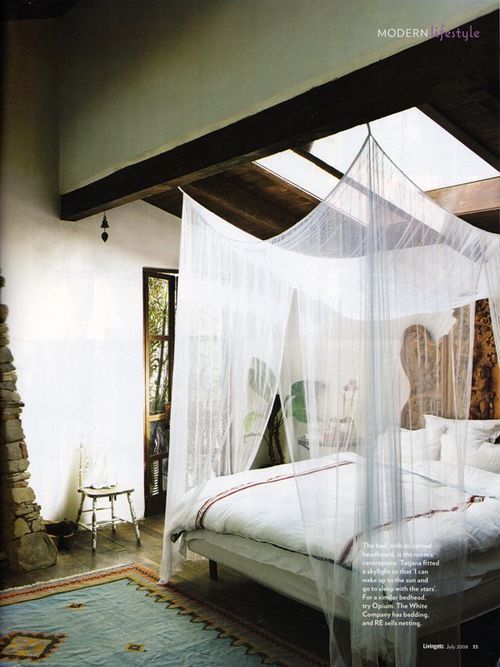
The dreamy house of supermodel Tatjana Patitz. . .


Images scanned & created by Moodboard from Livingetc Magazine July 2008/Photography Richard Powers 

8.09.2012

Sanctuary Clothing

Lovely tops from Sanctuary Clothing, featured in the latest Lucky magazine.


1, 2, 3, 4

4.16.2012

Interior of the Week

This inviting room, in architect Laura Gonzalez's homewas in an issue of Elle Decoration France.  I love the warm colors, wallpaper, chandelier, and Southwestern textiles.

1.05.2012

Inslee

Obsessed with this illustration from Inslee for Matchbook and Jacques Levine slippers.  The richness of the colors, the eclectic furniture, and the warmth of the room are absolutely divine.

1.04.2012

Matchbook Magazine

I love this list from the January No. 12 issue of Matchbook Magazine.  It's fun to have some simple pleasures and add some levity to the year with scrabble, road trips, and baking.

12.15.2011

Echo Scarves

I adore square scarves, they are so versatile.  These lovely scarves from Echo were featured in the January issue of Lucky.


10.18.2011

Janet Hill Studio

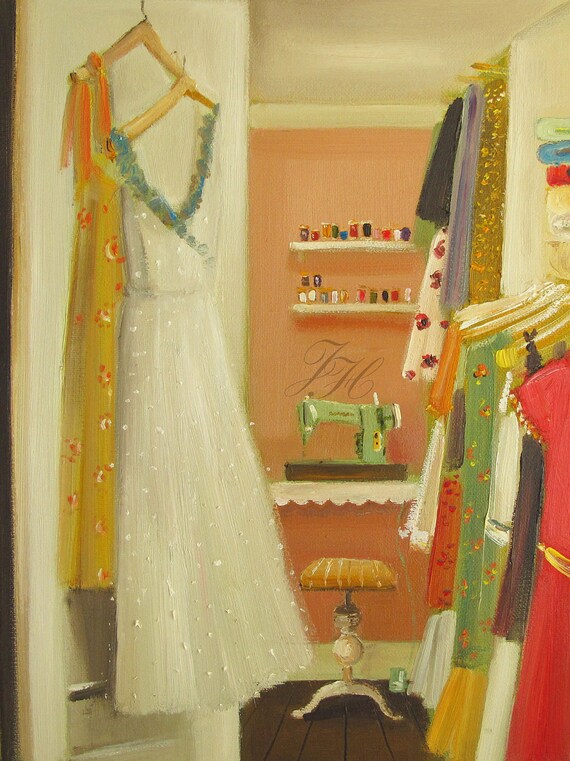
These stunningly beautiful paintings are from Janet Hill.  I love the vibrant colors and the beautiful scenes she paints from her lovely studio in Ontario (which was featured in Matchbook Magazine.)


9.28.2011

Lonny Magazine

If you haven't already discovered the magic that is Lonny, then it's your lucky day.  Lonny is an online magazine filled with beautiful inspiration, interviews, and helpful tips.

Isn't it fun when you find a whole new dimension, like: online magazines, vegan restaurants, or tennis tournaments you never knew existed?  Life is full of fun little surprises.


9.16.2011

Dr. Hauschka

I've been researching skin care products from Dr. Hauschka since reading about them in this month's Lucky magazine, which featured beauty editors sharing their skincare routines.

It is such an interesting line of products with a refreshing holistic approach.  (Apparently I've been doing it all wrong:)  I've been trying to follow their technique this week, we'll see how it goes...

6.30.2011

Oliver Peoples

I bookmarked Oliver Peoples after reading about Zooey Deschanel loving them in Lucky.  So, she vouches for them and I can't afford them...


5.11.2011

Digby & Iona

This necklace I spotted in Lucky is too cute; it's actually a functioning telescope!

10.19.2010

Clarks Desert Boots

I've been wanting a pair of desert boots since I saw a spread on them in my Lucky magazine.  They are so great to pair with jeans in the winter or with flirty dresses in the summer.